What Are the Most Effective Hair Removal Services for Sensitive Skin in Pittsburgh?
A bad reaction to waxing usually isn’t about waxing itself. It’s about the wax, the technique, and whether anyone checked what your skin could handle before starting. At ESSpa Kozmetika, a local Pittsburgh spa, our estheticians build every hair removal session around your skin’s actual sensitivity instead of a standard routine, so redness and bumps stop being the price of smooth skin.
Our team has worked with reactive and easily irritated skin at our Aspinwall spa since 2002. Reading the skin first, then choosing the wax, the temperature, and the technique to match it, is what separates a session you recover from in an hour from one you’re still nursing a week later.
Why Sensitive Skin Reacts Differently
Reactive skin carries a thinner protective barrier than resilient skin. It loses moisture faster, takes longer to recover from physical contact, and flares at products a different skin type would shrug off. Add wax, heat, and mechanical pulling, and the window for irritation opens wide.
Products come first. Waxes loaded with synthetic fragrance, heavy resin, or alcohol sit harder on reactive skin than cleaner formulations do. We use European hard wax blended with tea tree oil and azulene, chosen for what a client’s skin can handle rather than what’s fastest to apply, a big part of why organic hair removal is safer for reactive skin types. We can’t wax clients currently taking Accutane, retin-A, or other antibiotics that increase skin sensitivity, so let us know before you book if any of those apply to you.
Temperature is the variable most clients never think about. Wax applied too hot stresses the skin before hair removal even begins. We monitor application temperature throughout every session, especially for clients with known sensitivities, and adjust as we go.
Hard Wax vs. Soft Wax for Reactive Skin
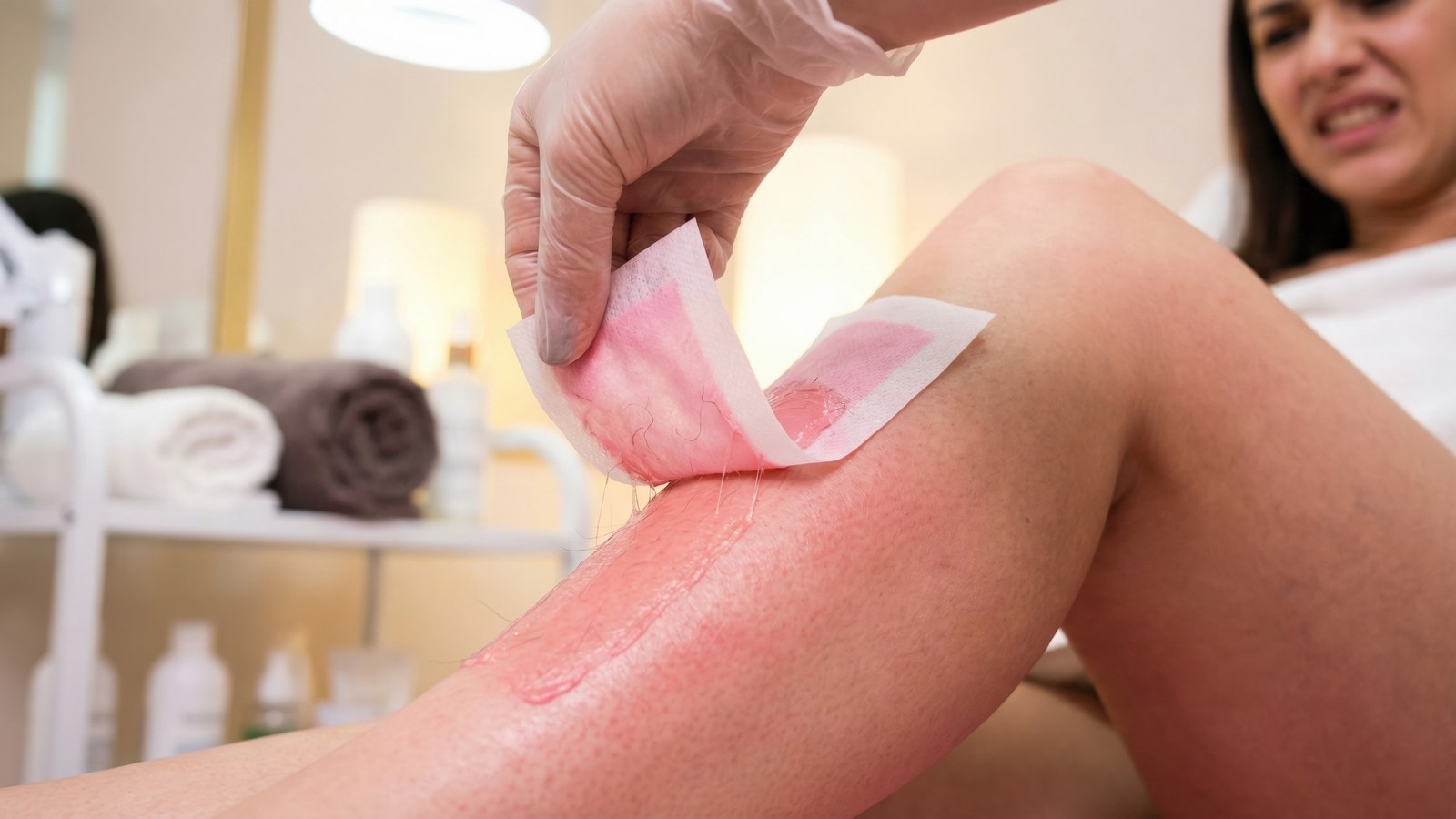
Soft wax goes on in thin layers and comes off with a cloth strip. It grips hair efficiently, but it also bonds to the skin surface. Resilient skin barely notices. Reactive skin absorbs the extra traction as prolonged redness and surface stress that take longer to calm.
Hard wax behaves differently. Applied thicker, it cools and hardens on its own, then releases without a strip. Because it wraps around the hair shaft instead of gripping the skin, the mechanical force during removal drops, making it a gentler way to get silky smooth summer skin without the extra irritation.
For clients with a history of post-wax irritation, that single variable often decides how their skin feels when they leave.
Wax type alone doesn’t determine the outcome, though. Skin prep, the angle and speed of removal, and what goes on immediately afterward all shape the result just as much.
Our finest hard wax is blended with:
- Tea tree oil, for its calming, antibacterial effect
- Azulene, to help bring down visible redness
- Chocolate and other anti-inflammatory botanicals, to soothe skin as the wax releases
- A rotating selection of European wax formulas suited to different hair and skin types
| Area | Starting Price |
|---|---|
| Lip | $20+ |
| Chin | $20+ |
| Underarm | $35+ |
| Half Arm | $40+ |
| Full Arm | $55+ |
| Half Leg | $50+ |
| Full Leg | $85+ |
| Classic Bikini | $50+ |
| Brazilian Bikini | $90+ |
| Back or Chest | $90+ |
Ready to see the difference the right wax makes? Call (412) 782-3888 to book your hair removal appointment, and mention your sensitivity concerns when you schedule.
How to Prepare for Your Appointment
Two to three days before your appointment, gentle exfoliation clears surface buildup and helps the wax reach the hair shaft cleanly, giving your hair removal and waxing session the best possible results. Skip exfoliating the day before and the morning of your visit, since freshly exfoliated skin has less surface protection and reacts more to waxing than skin that’s had a day to recover.
On the day of your appointment:
- Arrive with clean, dry skin. Skip lotions, oils, and heavy moisturizers on the treatment area
- Confirm hair growth is between 1/2 and 1 inch. Shorter hair means less grip; longer means extra passes
- Mention any prescription topicals, retinoids, or antibiotics before your esthetician starts
- Stay hydrated in the days leading up to your visit. Cellular hydration helps skin handle physical stress and recover faster
A lubricated surface keeps wax from bonding properly, which means extra passes over the same spot. For sensitive skin, extra passes mean extra stress, so skipping the morning moisturizer is worth an hour of dry-skin feeling.
What Happens During and After Your Session
Every appointment starts with a short intake. We ask about your skin history, past reactions, anything you’re currently applying to the area, and what you want out of the session. The answers change how we run it. That’s not a formality; it’s how the approach ends up fitting your skin instead of a generic routine.
Post-treatment care happens before you leave, not as an afterthought. We apply a calming product to bring the skin’s surface temperature down and cut visible redness. For sensitive skin clients, that step carries more weight than it does for anyone else.
For the rest of the day, keep the treated area out of direct heat and sun, and skip exercise for 24 hours. Sweat and bacteria getting into open follicles after waxing is a common, avoidable cause of post-session bumps that have nothing to do with the wax itself.
Our team has worked with Pittsburgh clients from our Aspinwall location since 2002, and a good number of the clients who come to us for hair removal had frustrating experiences elsewhere and assumed sensitive skin ruled out waxing altogether. Usually, that wasn’t the real problem. It was the approach.
With consistent appointments, hair typically grows back finer and sparser, meaning less physical stress on the skin each time. Many clients who react strongly at first find their skin settles considerably after a few consistent visits. We track how your skin responded last time and adjust accordingly, which is the kind of continuity you lose by booking somewhere different every visit.
If waxing has left you frustrated before, book a consultation and tell us what happened last time. We’ll build the session around it.
Frequently Asked Questions
Both can often be worked around, but timing matters. Wait until an active flare settles before booking. Once your skin is stable, we can adjust products and technique to fit its specific sensitivities. Always disclose any skin condition at the start of your appointment so we can plan the session accordingly.
Most clients do well with four to six weeks between sessions. For sensitive skin, slightly longer intervals during your first few appointments can give your skin time to adjust. After that, most people settle into a rhythm that fits both their skin and their schedule.
Some redness is normal, especially after your first session or if your skin runs reactive. For most people it settles within a few hours. Keeping the area clean, cool, and out of the sun helps it calm faster. If reactions are significant or consistent, bring it up at your next visit.
Keep synthetic fragrance, alcohol, and heavy oils away from the treated area for at least 24 hours. Skin is more open right after hair removal, so harsh ingredients act faster than usual. Stick to gentle, fragrance-free products on the treated area for the first day.
For most clients, yes. Regular waxing tends to produce finer, slower-growing hair, which lowers the physical stress on the skin at each session. Clients who react strongly early on often find their skin settles as they build a consistent appointment history with the same esthetician.
Ready to see the difference the right wax makes? Call (412) 782-3888 to book your hair removal appointment, and mention your sensitivity concerns when you schedule.
Contact Us
Phone: (412) 782-3888
Email: esspasalon@gmail.com
Address: 17 Brilliant Avenue, Pittsburgh, PA 15215 (Aspinwall)
Hours: Sun 10am–5pm · Mon–Thu 10am–6pm · Fri 9am–5pm · Sat 9am–5pm